Thursday, September 28, 2006
"Many, because orchids"
Half a century later, it is impressive how Reyner Banham's text "A Throw-away Aesthetic" is still one of the most important insights on design in our time.

Wednesday, September 27, 2006
there's something too perfect in the kingdom of denmark
Following on Yimei's post on Bruce Mau, it is adequate to check again the "Too perfect" project/exhibition he curated in 2004. This is described as a set of "pragmatic utopias" shaping possible futures for Denmark. With contributions by Mau's studio, and danish firms Arkitema, Kontrapunkt, NORD, SRL Arkitekter and (the irresistible) PLOT.
Tuesday, September 26, 2006
A bit of Pynchon
Regarding the previous post, some characters with a "Dr." prefix may come to mind (Frankestein, Octopus, the like), as well as distopian and technophobic themes and stories.
But things are never as simple as we would like them to be. Maybe this text (from 1984) by Thomas Pynchon is adequate for our meditations on these issues:
Is it O.K. to be a Luddite?
(file under obscure)
But things are never as simple as we would like them to be. Maybe this text (from 1984) by Thomas Pynchon is adequate for our meditations on these issues:
Is it O.K. to be a Luddite?
(file under obscure)
Thursday, September 21, 2006
On nature and technique, part VII

Maybe it is just me, but it seems that the amount of news regarding experiments and research that blur the distinctions or frontiers between the organic and the technical is growing a lot lately.
Roland Piquepaille writes about the first "bionic woman"; researchers at Princeton and the University of Cambridge are developing a stretchable electronic skin; and researchers at Harvard are working on hybrid structures of neurons and nanowires.
(Quote from this article: "
The neurons grew on the chip and made connections with the nanowires". And these are only a few examples.)
Monday, September 18, 2006
Sunday, September 17, 2006
photovoltaic interlude, part III
"Solar Cells for Cheap" is a quite interesting interview with Michael Grätzel (from EPFL) on what might happen soon (next couple of years) in the realm of photovoltaic systems.
Thursday, September 14, 2006
Algorithms at work

Some hands on algorithms for construction elements.
architectural finishes (column covers, walls and ceiling systemns) using AlgoRhythm technologies to efficiently bend sheets of metals into complex forms, by Haresh Lalvani (Pratt institute).
Tuesday, September 12, 2006
On dynamic arch

As always, just dropping the thing
here is an inspiring animation of the inner life of a cell
"Nuclei, proteins and lipids move with bug-like authority, slithering, gliding and twisting through 3D space"
On nature and technique, part VI
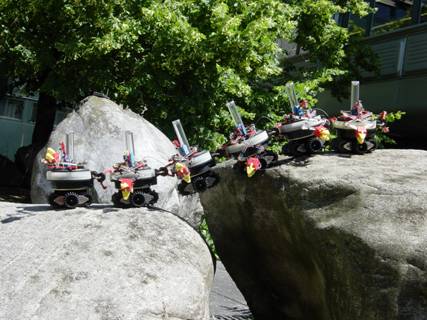
The theme of swarms deserves its own series around here (one of these days). But this project is too interesting to be left out of our current focus: Swarm-bots (pdf).
More info here.
(on a related note, I also like the shrimp)
Monday, September 11, 2006
NodeBox
No time really to post, sorry
I just found this site by chance and had no time to go thru
but it looks promising
http://research.nodebox.net/Index
I just found this site by chance and had no time to go thru
but it looks promising
http://research.nodebox.net/Index
Thursday, September 07, 2006
Friday, September 01, 2006
Bliki
blog + wiki = bliki
I was thinking of the possible potential for a hybrid between these two apparently opposite approaches to web publishing when... I found it is well developed already.
Then I thought of PROTO.lab and the possibility of organising the class in a bliki format.
Belated thoughts on blogs and wikis by J. Tauber, the founder of Leonardo, a Python based bliki server
I was thinking of the possible potential for a hybrid between these two apparently opposite approaches to web publishing when... I found it is well developed already.
Then I thought of PROTO.lab and the possibility of organising the class in a bliki format.
Belated thoughts on blogs and wikis by J. Tauber, the founder of Leonardo, a Python based bliki server
Thursday, August 31, 2006
mapping some more
a new mapping tool, this time by recopilating global data to map through a wiki called MG dedicated to mapping globalization by Princeton University and University of Washington.
via WorldChanging, by Sarah Rich
via WorldChanging, by Sarah Rich
Monday, August 28, 2006
On nature and technique, part V
Eugene Thacker is one of the few guides we may have when confronting the complex issues regarding what is usually called biotechnology, or, as he suggests, Biomedia.
His articles for C-Theory, such as "Biophilosophy for the 21st Century" are worth checking out, as well as the collective project "biotech hobbyist".
His articles for C-Theory, such as "Biophilosophy for the 21st Century" are worth checking out, as well as the collective project "biotech hobbyist".
four letter words to shout in the tube
Nuno, don't get me started, I have so much to do!
following your link about the factbook, ... I think its worth of its own link
viz4all of University of Maryland
specially the works of Karsten Schmidt on 4 letter words in english and Tom Carden on london's tube traveling time.
following your link about the factbook, ... I think its worth of its own link
viz4all of University of Maryland
specially the works of Karsten Schmidt on 4 letter words in english and Tom Carden on london's tube traveling time.
kk's street use


Kevin Kelly has expanded his site with a new section: street use, in which are shown all kinds of unexpected of unintended modifications of machines, artifacts and technologies that occur a bit everywhere.
Pictured examples: an old school bus used for storing vegetables, and this airconditioner fan hack (we should have built a similar one in July).
Saturday, August 26, 2006
talking about mapping
I hate to refer to the CIA in these pages but I found this document on world mapping to be quite surprising, if anything for being public (since 1975!!).
I have to see if they say where the nuclear weapons are hidden in irak.
It seems very useful information, I just can't bring myself to look at it as a inoffensive little book
CIA World Factbook
I have to see if they say where the nuclear weapons are hidden in irak.
It seems very useful information, I just can't bring myself to look at it as a inoffensive little book
CIA World Factbook
a large cabinet of curiosities
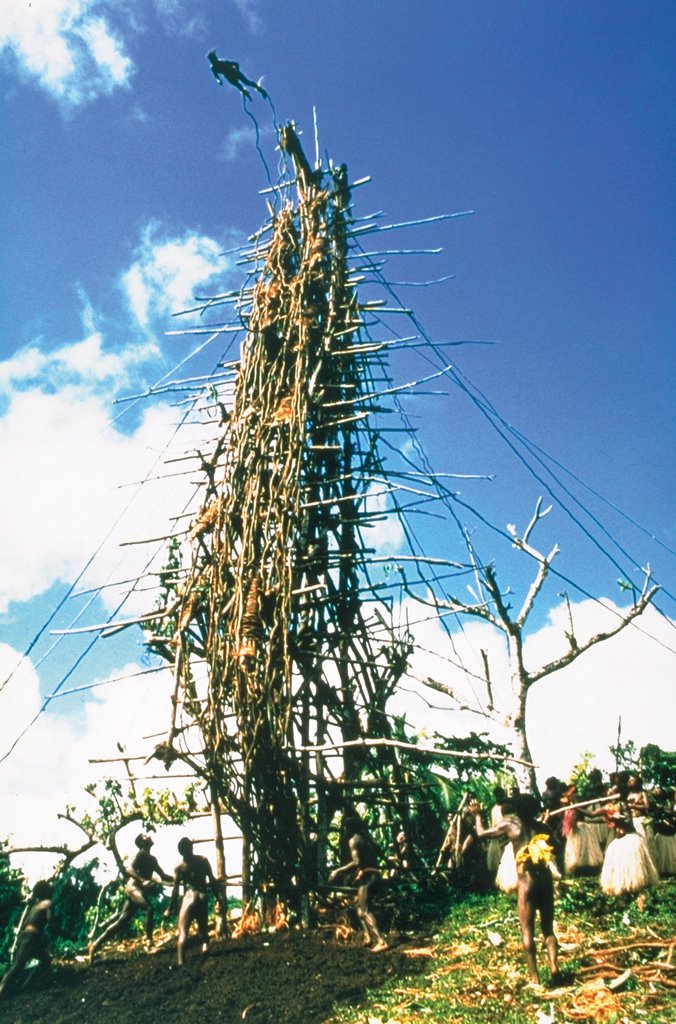
Many blogs are, to some extent, wunderkammers. But the closest I know to such a description is the Proceedings of the Athanasius Kircher Society. The kind of site worth checking by the end of the day. For example, take this series on Pentecost Island land divers.
On nature and technique, part IV
An interesting interview with Daniel Dennett, by Hari Kunzru .
(warning: it will get more and more indigestible from this point onward. i'm so sorry)
(warning: it will get more and more indigestible from this point onward. i'm so sorry)
Wednesday, August 23, 2006
Subscribe to:
Posts (Atom)