Tuesday, August 22, 2006

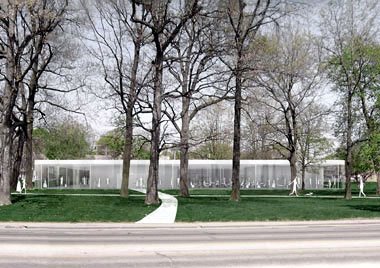
SANAA Glass Pavilion, Ohio


What do you think about this plan? Does it look familiar?

Tuesday, August 01, 2006

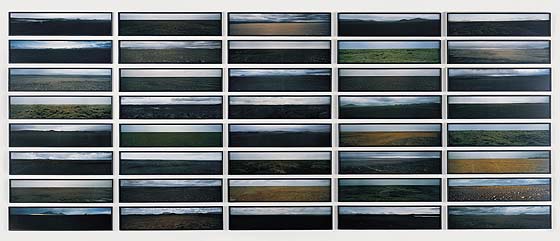
integrated actions


interesting program at the university of berlin
hands on
a reference for protolab

Sunday, July 23, 2006

Using Processing for physical pixel

Ping genius loci - This project by Aether Architecture using Processing is quite interesting. Check it out!

Bioprinting

Print me a heart and a set of arteries - 3D prototyping technology finds its applications in tissue engineering as well. This is the original blog from bldgblog.

Thursday, July 20, 2006

Flexibility


No time left for posting, so here goes, in telegraphic mode:

the structures and ideas of Chuck Hoberman

and an interesting new material: d3o

Wednesday, July 19, 2006

insectivora arch.

You have to check this out
enjoy

Wednesday, July 12, 2006

Grancrete

It may be a bit old. Just in case you have not read it before.

Monday, July 10, 2006

Olafur Eliasson


Do you remember Carlos? This guy is making an exhibition in Madrid until Aug. 27th, so if anyone is around Madrid, take a look.

Wednesday, July 05, 2006

AA showcase

This is probably why this gentleman has not updated for several weeks: experimentaation

Worth checking: everything, but specially diploma 4, emergent technologies and, of course, drl

Wednesday, June 28, 2006

Tensegrity in a cell


This is a very interesting article. It's really worth checking the interactive feature, and, specially, the articles, animations and links that are found at the end.
The lab behind it is run by this guy who does not shy away from being inspired by art and architecture.

Raphael Navot


I had seen this work long time ago (Frame 03)
and I thought it was very advance in the sense that it brought in a certain sense of nostalgy for the digital imaginery. I don't have a clue of how it may relate to us, but I am glad I found it again and I am dropping in just in case it helps to open a door.

Earth Surface Machine


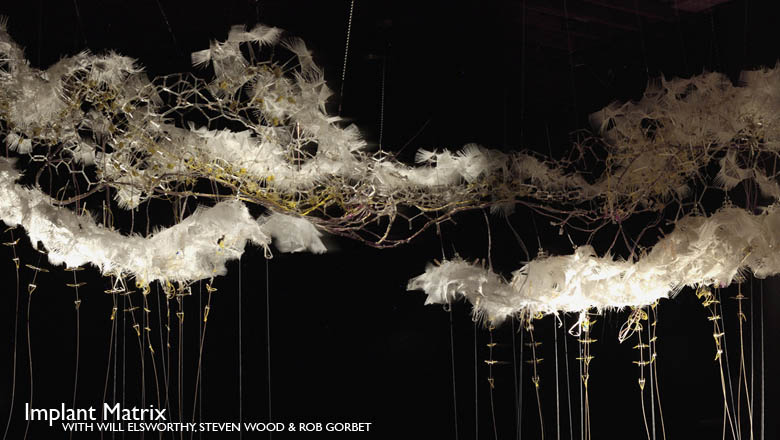
Very elaborate post on BLDGBLOG about Philip Beesley's work in Toronto that is worth checking out. Wonderful images.

Tuesday, June 27, 2006

mapping blogosphere

another interesting work on mapping. this time the world of blogs.
data mining
nothing new, but still good to keep

Saturday, June 24, 2006

design sponge

design sponge is a popular blog site to promote new ideas, also a place where inspiration could be drawn

Thursday, June 22, 2006

Tuesday, June 20, 2006

Wikipedia se defiende de los vándalos

Los editores de la enciclopedia libre bloquean artĂ­culos conflictivos.

Monday, June 19, 2006

programming design I

...or designing by music.
divertimento
"Giant Steps" by Michal Levy

David, I think you should take this one further.

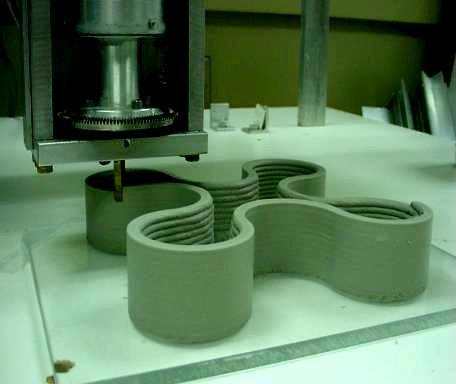
Contour Crafting


is like that breath in the back of your neck
check out the demo videos

countour crafting (CC) is a layered fabrication technology developed by Dr. Behrokh Khoshnevis of the University of Southern California. Contour Crafting technology has great potential for automating the construction of whole structures as well as sub-components. Using this process, a single house or a colony of houses, each with possibly a different design, may be automatically constructed in a single run, embedded in each house all the conduits for electrical, plumbing and air-conditioning.

industry shift

industrial manufactures are steping in.
welcome to a brave new world...
panasonic
toyota
ikea

Saturday, June 17, 2006

nanotechnology in architecture

here is a site recently launched about nanotechnology and architectural implications. It also linked to this site by Peter Teadon and another one on consumer product applications and many others....

Friday, June 16, 2006

lets step out and take some fresh air...

"It took us a long time to realize that the power of a technology is proportional to its inherent out-of-controlness, its inherent ability to surprise and be generative. In fact, unless we can worry about a technology, it is not revolutionary enough"

Will Spiritual Robots Replace Humanity by 2100?
by Kevin Kelly

Keller Easterling at the CCCB


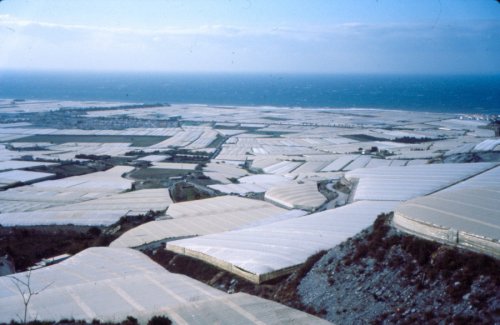
Keller Easterling is one of the most important contemporary writers working on the issues of urbanism, architecture and organization in relation to the phenomena commonly defined as globalization. She wrote books and articles on organization and outlaw spatial products.
One of her themes is the high-tech agriculture at Almeria (pictured).

She will be (hopefully) at the CCCB on Monday, the 19th, at 20:00.

photovoltaic interlude, part II


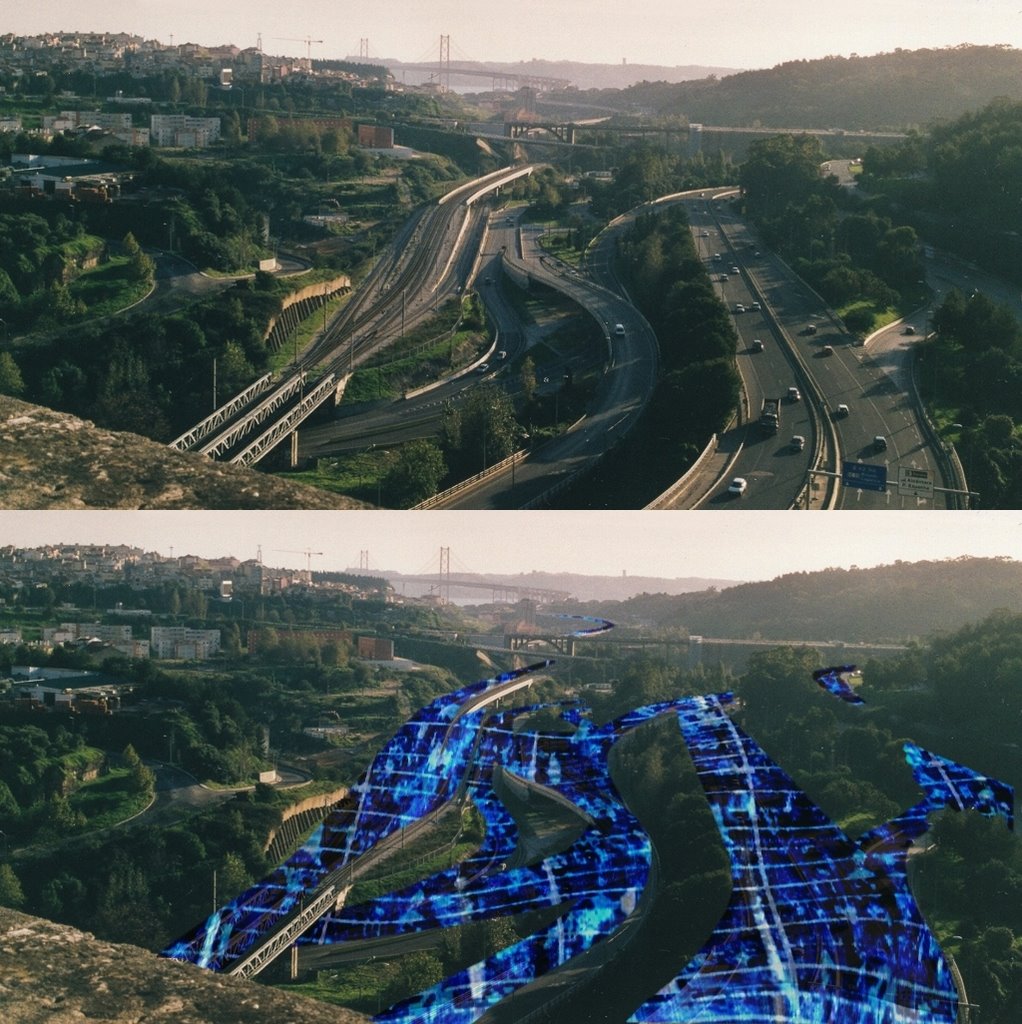
Expressways could be retrofitted with vast, overbearing tensile structures supporting photovoltaic materials, thus becoming distributed energy producers. Their spreading and implied connection with urban and industrial structures would help minimize the waste of energy that occurs with its transport from production to consumption sites, that here would almost coincide.

Some art for the weekend


In retrospect, we don't have many posts on "contemporary art" as such. Or have we? Can we still take neat, compartmentalized categories seriously? Anyway, here's some Tony Cragg.

On a different note, vvork is a great source for many great stuff out there. It points us towards the likes of Roxy Paine, Simone Decker, Chris Jordan, Julia Lohmann, demakersvan, Tara Donovan, and many, many others.

(warning: as with everything, proceed at your own risk)

Wednesday, June 14, 2006

the.very.many

Some updates on the.very.many site and many scripts files for reference information and testing.

Monday, June 12, 2006

Minimal Surface


A new world of surfaces is coming... Take a look at this site.

Saturday, June 10, 2006

Architecture and mathematics

A little bit of history on architecture, mathematics, geometry and art tought by Juan Monterde teacher at the University of Valencia. It's just an overview, short an simple.

Wednesday, June 07, 2006

On energy, hydraulics and deviations - part IV


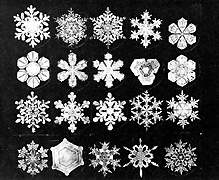
Wilson Bentley's beautiful images of snowflakes.

Engines of Creation

One of the key books regarding nanotechnology is now online, for free. And also, Eric Drexler's site is worth checking. As well as this one.

It will still take a couple of decades for this technology to be available for making truly gravity-defying architecture, for example. Or truly smart architecture. Or...

Let's hope the trend of crucial books being made available by their authors continues.
(There was already John Frazer's, as well as S. Wolfram's A new kind of science, and certainly more that I don't remember right now)

Wednesday, May 31, 2006

Two events in Barcelona


1,2,3,4 of June - an installation by Architects-of-Air (images) at the CosmoCaixa museum. Not as mind-bending as this one, but still worth a visit;

from 26 to 30 of June - Arduino workshop (tutors website here).

On energy, hydraulics and deviations - part II

Pruned has lots of good posts somehow dealing with this theme: this one, this one (alluvial valley), this one , and this account of a damn' good project - wave garden by Y. Obuchi.

On energy, hydraulics and deviations - part I


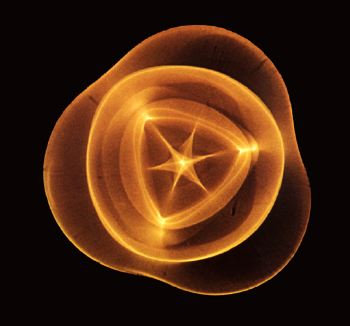
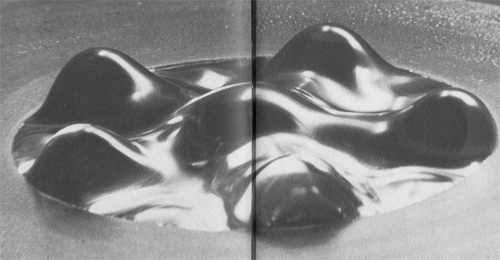
The work of Hans Jenny: emergent patterns within liquids affected by sound vibrations.

(a pity that this gets wrapped up in somewhat mystic blabber, but nothing's perfect)

"We might just be insects pollinating machines that do not happen to have their own reproductive organs right now."

An oldie but goodie: interview with Manuel De Landa (circa 1992), worth reading every bit.

(warning: not for the faint of openness. For a more rigorous, dense interview check this one)

Tuesday, May 30, 2006

Kinetic Design Group

Besides the work they're doing, there's an interesting workshop with some nice case studies.

Saturday, May 27, 2006

Math in Architecture (cont'd)

Inspiration study on mathematical formula.


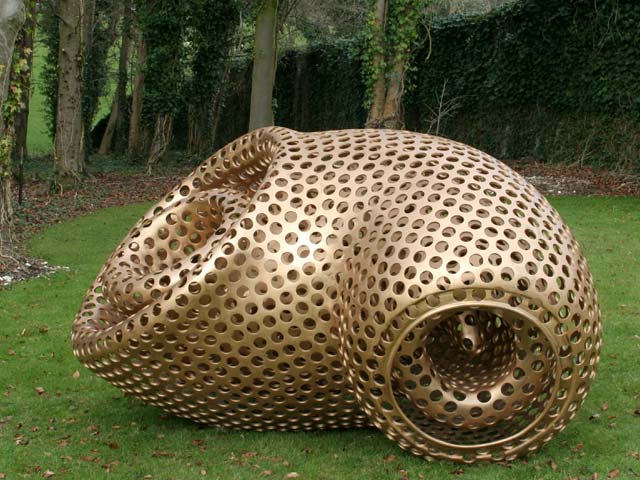
chaoscope

Chaoscope is a 3D strange attractors rendering software. It's a computer tool used to help comprehending dynamic systems, a superset of the strange attractors. (most of them based on mathematical models) Also check out this sculptor's website and his experiment with math as well.

Plant Cellular Anatomy

For inspiration only: the architecture of plant tissues.

Thursday, May 25, 2006

Math in Architecture


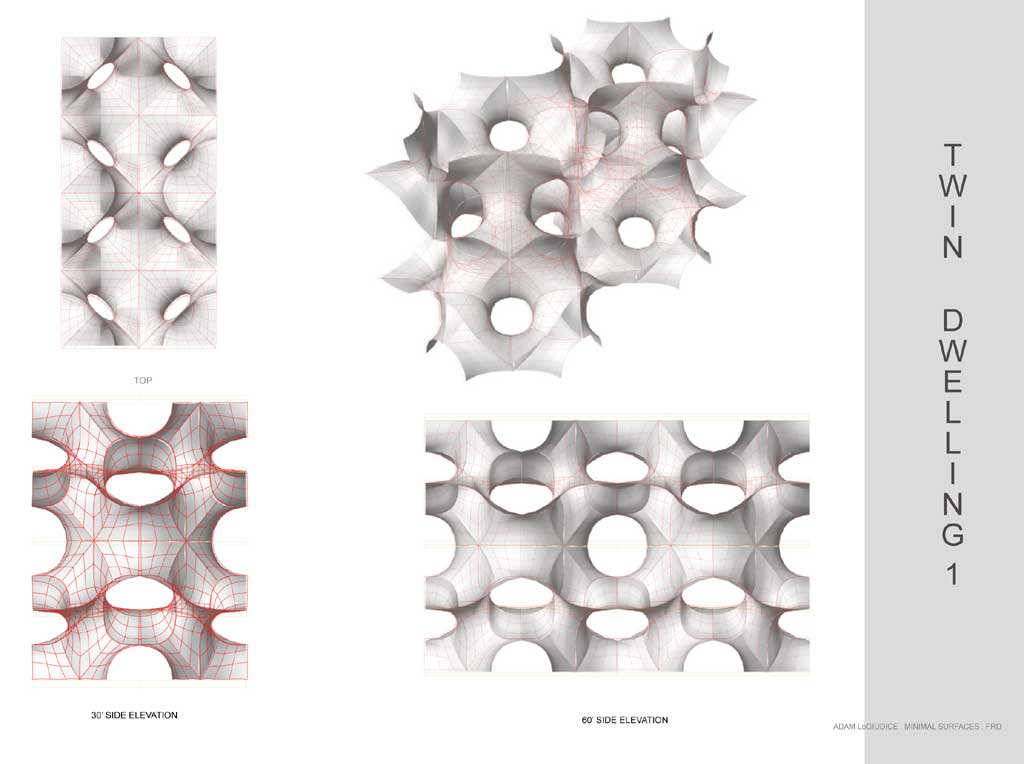
Architecture and the Rhino Math Plug-In - Twin dwelling

The studio focus its investigation by exploring recent advancements of surface theory in mathematics, architecture's return to material practices, industrial shifts from mass standardization to mass customization, and new socio-economical programmatic relationships.

Wednesday, May 24, 2006

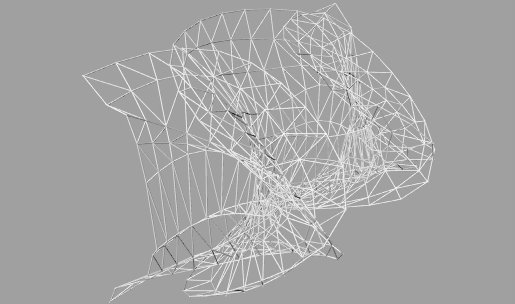
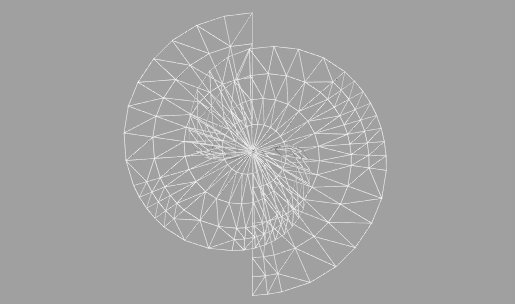
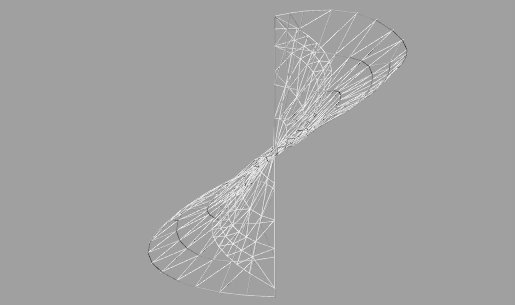
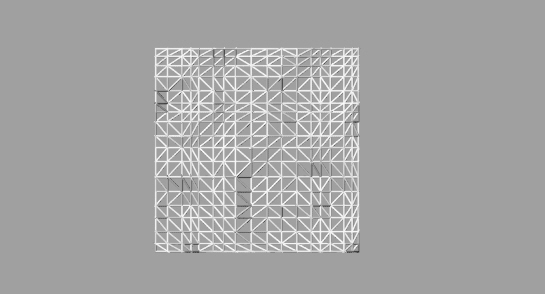
IRMA Part 1


Square Base


Amorphous


Pipe

Thursday, May 18, 2006

Fabrication: The Fifth Ecology of Los Angeles

Michael Speaks interviews seven young LA-based practices involved with digital design and fabrication. Listen to the audio online.

On prototypes, part VII


This blog is a riveting account of the process of building a miniskyscraper whose structure moves and adapts with its own muscles. Great stuff.

Tuesday, May 16, 2006

Visual Complexity

This is one of the latest project by Jeff Gray at NYU. A shift in the Fabric links you to the project which is an exploration of overlapping networks and their integration together as one large network "eco-system".

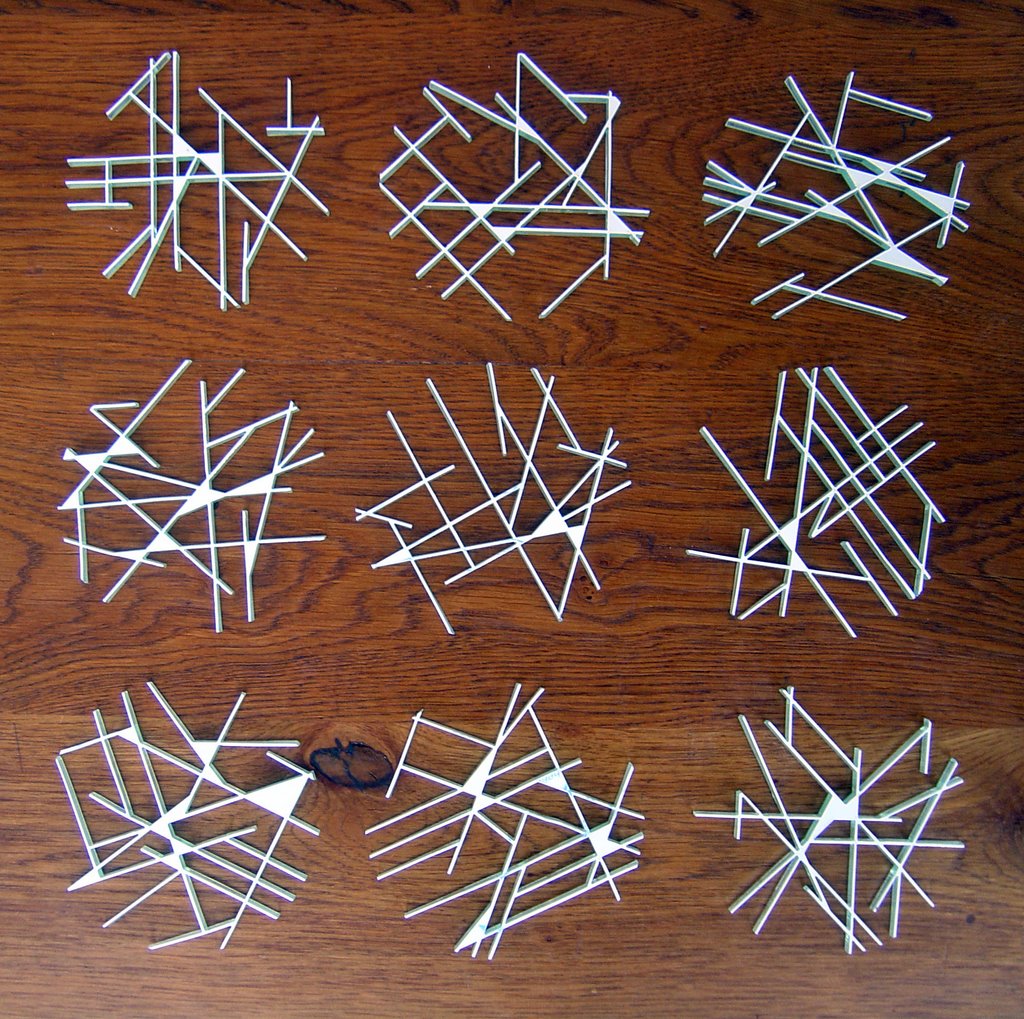
Paper sculpture

The process of rapid prototyping was explored in the creation of solid sliceform models.

The Third Culture

Regarding the previous post: I came across the reference of W. Fontana while reading this great book, by Brian Goodwin, who has contributed to EDGE.

Edge offers a lot of important essays, debates and discussions. Some examples:
The Third Culture
"What Is The Most Important Invention In The Past Two Thousand Years?"
"What do you believe is true even though you cannot prove it?"

there's more, much more. and also this...

Alchemy

ALgorithmic CHEmistrY: one of several papers by Walter Fontana et al.

scripting resources, part II

Daniel Shiffman's site is excellent: explanations, examples, code, course wiki, etc, etc.

(via resarch)

Sunday, May 14, 2006

Thom Mayne's 'socials' in Madrid

Plans , sections, elevations and 3d models of firm's Madrid social housing project. This could be one type of projects created by algorithm design.

Saturday, May 13, 2006

"Optical matter" and re-mapping the planet

These two great posts by BLDBLG point us to some recent articles in (the excellent) NewScientist:
one, about, yes, building with light;
the other, about this great effort.

By the way, NewScientist has a couple of worth-reading blogs, like this one on inventions and patents and this one on technology in general. This is also funny. And this. And...

Thursday, May 11, 2006

Two versions of Kwinter

A pair of Sanford Kwinter's texts, written for different audiences, and thus different in style and scope, both really worth reading and comparing:

"Architecture's Scientific Revolution" for Seed magazine, in part for people mostly unfamiliarized with what is going on in arch&design (which might include some architects...);

"Knowledge Activism" for 32BNY, shares a lot with his text for Log #5, but goes further.
Extracts:
"To think pattern, is to resolve much of the old program/form dichotomy (they are both subsumed by it as two manifestations of the same impetus); it is to see design as problem and product of organization."
"Invention, speculation, projection: what are these but forms of meditation, the highest forms of knowledge, homages to the now, inquiries into the dancing forces that are at work composing the present. Speculative activity is a scientific inventory of effects, tendencies, directions, the very truest form of cartography. This is how I see the problem of change."

Wednesday, May 10, 2006

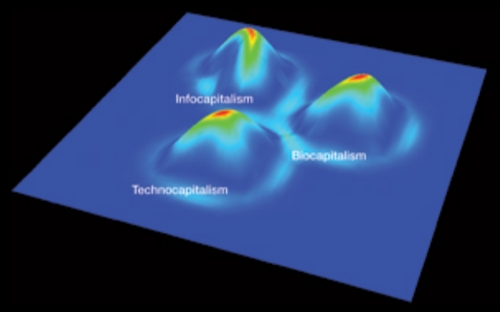
Research on the Biocapitalist Landscape


Philippe Morel is that french guy I was telling you about the other day. He teaches at several schools and carries out research on many subjects. For me, his "Research on the Biocapitalist Landscape" is the most interesting and provocative.

(it's a pitty that his site bears a flash-bloated, user-despising interface...)

Sunday, May 07, 2006

On prototypes, part VI

The AA is giving some of its students support for the construction of a "Serpentine pavillion-style" prototype. Its description and progress can be checked over here (needs registration). Besides the qualities of the project, it is interesting to notice how the school helped in the necessary networking between the students and the sponsors/contractors and engineers.

Friday, May 05, 2006

Museum of Chance

Herzog & de Meuron thinks like an artist—and produces a museum addition as pragmatic as it is unpredictable

Frei Otto

Selected works of Frei Otto.

Interactive Architecture

Interactive Architecture dot Org is a weblog about the emerging practice within architecture that aims to merge the digital virtual with tangible and physical spatial experience. Instead of defining a fixed architectural product it is an architecture in constant flux best suited to prototyping and semi-perminant installations.
It is maintained by Ruairi Glynn. Bartlett School of Architecture. UK

On Prototyping - infraestructure

I am starting with the list in Praxis 6 and I will keep adding references:

CNC Milling
Techno-Isel
Haas
Precix
Prieto Carnaghi

Laser Cutter
Universal Laser System
Kern Electronis and Lasers
Precix

Water Jet
Jet Edge
Flow

3D Printing
Z-corp
Stratasys
Arrk

Tuesday, May 02, 2006

Online collaborative software, part III

Wikis better than wikis, or, in other words, that are easy to set up and still work for small groups of people (like us!...)

At least that's how that article describes CentralDesktop and Rallypoint.

Online collaborative software, part II

Basecamp is perhaps the most useful product by 37signals. And they offer a free plan .

Online collaborative software, part I

We have been talking of considering other tools, other than the blog, to better organize and correlate our findings and all the stuff we would like to further explore.

So, this is the start of a new series on recently developed collaborative software that is now making its way into collective efforts. Let's begin by checking the applications described in this article (I got through it via slashdot).

Sunday, April 30, 2006

Consensus web filter

Thanks to the Kevin Kelly website. I found this link especially interesting. Remember we talked about this before? A consensus web filter. Here is the article that explains how the algorithms work.

Saturday, April 29, 2006

On prototypes, part V

Archinect gallery of some prototypes by Herzog&Meuron for this project in Manhattan.

Thursday, April 27, 2006

Folding Architecture

These people are searching for new forms in a more traditional way. But it's also interesting to see the approach they are making and their task on deciphering the paperfold algorithm as a morphogenic mechanism.
Understanding and developing the paperfold algorithm transgresses the singularity of the object spawning a series of similar but varying artefacts.

On prototypes, part IV

The projects page of the Responsive Environments Group at MIT's Media Lab.
They work on stuff like this.

On a related note, I also like this idea.

"The tools for managing paradox are still undeveloped"

From this illuminating article by Kevin Kelly.

Also available here.

K. Kelly's whole site is worth checking, he even makes some of his books available, and there is this nice section dealing with cool tools.

Wednesday, April 26, 2006

photovoltaic interlude

Almost all prototypical research in the field of energy generation takes place outside the design world. Of course, it is more confortable to consider projects like Holographic Solar and spherical cells as exclusively technical endeavors (as if design could afford to remain detached from technique).

Could projects like these and these, promoted by, yes, the military, channel different attitudes from design's agencies and actors?

Tuesday, April 25, 2006

more from the eth caad string

design to production by Fabian Scheurer and Christoph Schindler

evolutive design?

Frank Gehry viewed by "the Simpsoms"
(Nuno, I think this is the video that JFrazer showed you.)

Monday, April 24, 2006

JFrazer making wine glasses

Interactive Evolutionary Design in a Hierarchical way
prelude for the design inteligence program

complex matters

very interesting proposals by two students of the UCL (Hanna and Mahdavi)
complex matters
remember our prototypical façade?

Sunday, April 23, 2006

Semantic terrains

Another beautiful example of mapping. this time by creating a geographical explanation.
Remedial landscapes by e-tag

Saturday, April 22, 2006

say hello to the first generation of sdk prototypes

Generated after some of the models developed by Irma
metacrilat laser cutted

Nuno, It brings back that first conversation at your house about Difference and Repetition

Friday, April 21, 2006

On prototypes, part III

Some relevant projects, that may just focus on specific construction techniques, or focus on more complex processes:

Algorithmic Brick Wall - ETHZ

Aegis Hyposurface

loop and Openloop

kinetic systems - MIT

Static! projects - Interactive Institute

transstudio shows a lot of products (that seem more prototypical than finished)

and I guess that the work of Usman Haque could be considered prototypical. But then again, it will be part of our effort to try to define what such could be...

On prototypes, part II

Some research institutions that specifically work with/on prototypes:

Interactive Institute

Ivrea

Innovation Lab

Hyperbody Research Group (at TU Delft)

SIAL

On prototypes, part I

It might be helpful to start a series on the prototyping theme.
Both the theoretical aspects, existing research institutions and relevant realizations should be considered. And as with everything, further suggestions will be added.

I'll start with recycling a text I've written a few months ago:


Prototypes, studios, the construction industry

Prototypes have emerged as multivalent pathways of exploration in recent academic experiments and achievements. They seem to be envisioned as “machines that could be used only once” (J. Bragança de Miranda), therefore never perfect, resisting idealization. As a machine, a prototype performs. It actively embodies the technical contingencies that coalesce into its fabrication. That is, the constitutive difference between the prototype, and other design media that involve making, is in the former’s implied concoction of disparate procedures and techniques (electronic and otherwise) into something that distinguishes itself by what it does.

(the full text is, for the moment, at http://indigestiblemorfogen.blogspot.com/ a temporary blog for all thick, indigestible or obscure theoretical texts that don´t fit here)

Hanna et al's publications

Whenever you have some free time available, it is well worth checking the publications page of Shean Hanna's site.

(Carlos, if you can, don't miss the one on creativity, and the ones on stereolithography.)

scripting resources

This is the start of an on-going, updatable, list of on-line resources regarding parametric-geometric scripting.
Initially, it will focus mostly on rhino and processing. Other programs will be included according to each and everyone's interests.

Yimei has already mentioned the reconstructivism people. This is a site that seems to be in line with sites like dritsas.net and design tooling.
Some scripts are made available on these sites, but the descriptions of the processes seem to be more complete, at least from a first approach point-of-view.

materialsystems has a few scripts, the theverymany.net keeps going strong and there's still hope of seeing these guys' scripts one day...

The Rhino site has this page , and this MIT resource still seems quite helpful (I wonder if there are other MIT pages).

Now, regarding processing and the like, this Yale resource seems quite good, as well as this MIT one, and we already mentioned complexification.net

Anymore suggestions?

some more algorithms

musical toys
one of them uses the "game of life" to generate tunes (life forms)
and many others in linked through soundtoys

Wednesday, April 19, 2006

sdkie_surface_generator

Here are some preliminary images from rhino scripting. With an auto generator of sdkie algorithm, there are multiple solutions with any predefined parameter surface, from orthogonal grid to deformed and rotated curves. Magnitude of curvature/waviness is a matter of overall scale and could be adjusted by a specified factor.


sdkie_one perspective


sdkie_one elev


sdkie_two perspective
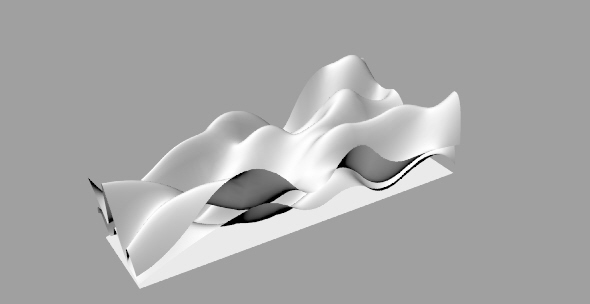


sdkie_three on two


sdkie_curve_rotate

Monday, April 17, 2006

back to it

I have had some time to think about the process, after discussing in detail with Nuno and David last week. Here are some thoughts on our subject.

At this point we have three main research lines that have to come together some time during the process:

Pattern Formation. Needs to be developed within the frame of genetic algorithms through rhino-script or other friendly scripting software. The starting point being the sdkies series, but moving quickly into crossbreeding and mutation. Ultimately we would need our own software to recognize the patterns from intuition.

Mapping, based on the information visualization technology, to be able to filter the patterns according to various variable requirements. This is a critical issue. It represent the breaking point of the current approach to design (is about choice in chance). We need to visualize lineages and extremes in each range. First step “Memeping”. For this it is critical to be very good friends with arrays (who would have said it)

Prototyping, which has to be taken from now on as the goal instead of as the instrument. We need to understand the current state of the prototyping industries, and its potential. Who is prototyping, what, materials, shortcomings, etc…

I think we can organize a second attack to the three issues in the next month in order to have a coherent body of work for the starting point of the media lab proposal. I suggest the following organization.

YiMei, you could take a look at the prototyping world
David, you should keep working in the mapping tool
I will continue with rhino scripting.
Nuno and Pepe will keep feeding us info.

Everybody should keep doing what they are doing in any case, since this is going great.

Nuno suggested to divide the blog into thematic blogs as the info becomes denser, or to try a wiki-site, any suggestions?

At one point soon I am going to finally open the web site so we have a face while we keep this as a nice and healthy brain.

Wednesday, April 12, 2006

m.any

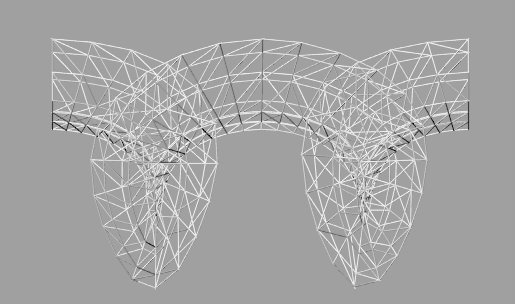
The concept of the design is based on cellular automata. It creates a self organised growing mesh where the designer is able to directly interfere with the running design by changing parameters and positions of the structural nodes. A computer simulation model was programmed in Java, using 3D API to visualize the design state in three dimensions. The resulting mesh is fl exible and manipulable, allowing it to adapt not only to the user defi ned parameters but also to contextual elements.

And here is the final product.

Tuesday, April 04, 2006

People Projects and Patterns

some how I had missed this site during the Oslo brainstorming
PP&P
which seems to be lounched by stanford u. through this WikiWikiWeb

Flight patterns

Beautiful information visualization on flight patterns
by Aaron Koblin


he teaches at UCLA and has some of his lectures on virtual form available

Spatial Interface Conference

It was fun.
Lots and lots of information, ideas, projects, ramblings, good and scary stuff, and even a few deliciously grumpy diatribes.

difficult to highlight the most relevant, but here goes:

first, check out Beau Lotto. "Abstracting systems, such as the brain, from ecology is meaningless."

at SIAL they seem to be touching on almost everything;

in this unit, films are the context, in every sense, of architectural projects;

Pete Silver set some robots roaming free;

John Frazer said everything must go. including him, apparently to here.
more on this later...
he spoke about some really mind-boggling issues. one was this: construction with no drawings, no specifications, just a fully parametric, ultra-detailed 3d model;

Ian Borden: how the car is the most technically intense interface in the everyday, and its interior the most adjustable of all architectures;

Jason Bruges & Co have some good work;

Dr Watson, D. Greene and Jon Goodbun were also good; and it ended really good, with a high-octane pataphysic-inspired, delirious and intricate presentation by this guy.

Computational Information Design

A very interesting disertation by Ben Fry under John Maeda at MIT

Really the problem being no longer to generate form but to filter it (Darwing like) for survivor

COOL new york art radio

WPS1 Art Radio is the Internet station of P.S.1 Contemporary Art Center, a MoMA affiliate, featuring an MP3 stream of music, talk, and historical recordings and a free on-demand archive of over 1200 programs.

Monday, April 03, 2006

Offf: Post-Digital Creation Culture

EXTEND: Advanced Processing Workshop
Led by Casey Reas, Ben Fry, Marius Watz and Zachary Lieberman
Barcelona, HANGAR 8 - 12 May

OFFF Barcelona:
Ben Fry & Casey Reas
/ Bigspaceship / Bradley Grosh [GMUNK] / Chuck Anderson / Erik Natzke / Folkert Gorter / Granatta / Group94 / Jonathan Harris / Kyle Cooper / Marcos Weskamp / Marius Watz / Nando Costa / Rob Chiu / Santiago Moebio / Scott Hansen (ISO50) / Supperstudio / Syrup / Vince Frost / Waskman / WeWorkForThem / Wig-01 / Zach Lieberman & Golan Levin / Ze Frank /

Barcelona, CCCB 12-13-14 May 2006
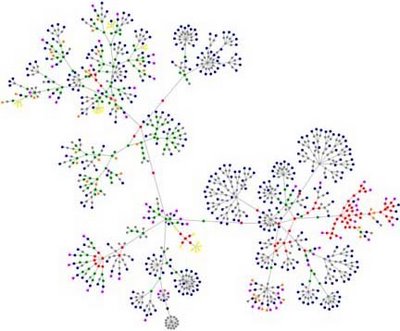
A project by OFFF and HANGAR part of OFFF 2006

Saturday, April 01, 2006

Hernan Diaz Alonso

I finally got around to make some contribution. Another guy working on scripts and algorithms and he just won the MOMA PS1 young architects competition. Don't forget to check out his website xefirotarch.